
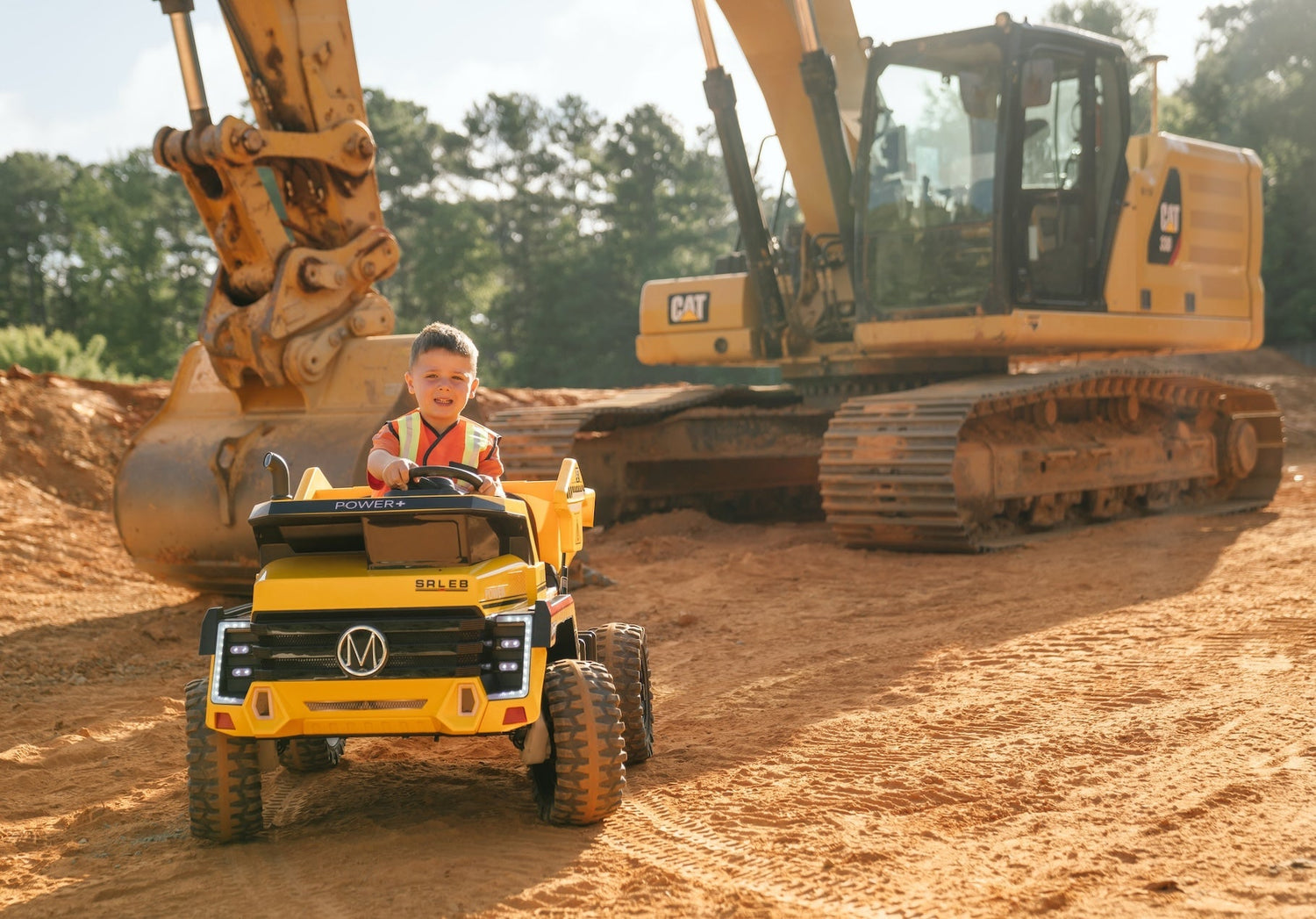
Walk into any toy aisle or scroll through any online marketplace in 2026, and you will be hit with hundreds of ride-on toys competing for your attention. Flashy stock photos, vague product descriptions, and price points ranging from $79 to well over $1,000 make the decision feel nearly impossible. As a parent, you just want to get it right the first time — something your child will actually love, something that will last more than one season, and something that does not collect dust in the garage after a week.
This ride-on toys buying guide is designed to cut through the noise. We are going to walk you through every factor that genuinely matters when choosing a ride-on vehicle for your child — from battery voltage and terrain capability to build quality and budget considerations. Whether you are shopping for a toddler taking their first independent ride or a seven-year-old who has outgrown their old Power Wheels, this guide has you covered.
By the time you finish reading, you will know exactly how to choose ride-on toys that match your child's age, your yard's terrain, and your family's expectations. No guesswork. No buyer's remorse.

Battery and Power: Understanding Voltage (6V vs 12V vs 24V)
If there is one specification that causes the most confusion for parents, it is battery voltage. You will see ride-on toys marketed as 6V, 12V, and 24V, but what do these numbers actually mean for your child's experience? Understanding voltage is the single most important technical decision in your entire ride-on toy buying process.
6V Ride-On Toys: The Gentle Introduction
Six-volt ride-on toys are built for the youngest riders — typically children ages one to three. These vehicles move at a leisurely walking pace, usually between 2 and 3.5 mph, which gives both kids and parents peace of mind during those early riding experiences. The slower speed is not a limitation; it is a deliberate safety feature for toddlers who are still developing coordination and spatial awareness.
A 6V battery typically provides 45 minutes to an hour of ride time on a full charge. The vehicles themselves tend to be smaller, lighter, and designed with low centers of gravity to prevent tipping. If you are looking at how to choose toddler ride-on toys, a 6V model is almost always the right starting point.
12V Ride-On Toys: The Middle Ground
Twelve-volt ride-on toys represent the largest segment of the market. They are suitable for children roughly ages three to six and offer speeds between 3 and 5 mph. The extra voltage translates to more power for tackling gentle inclines and slightly rougher surfaces like packed dirt or short grass. Battery life generally falls between one and two hours depending on the terrain and the child's weight.
For many families, a 12V ride-on seems like the safe, middle-of-the-road choice. And for flat driveways and smooth sidewalks, it can work just fine. But if your child will be riding on grass, gravel, or any kind of slope, you may find that a 12V motor struggles — especially as your child grows heavier. This is one of the most common complaints parents share after purchasing a 12V model.
24V Ride-On Toys: Real Power for Real Adventures
Twenty-four-volt ride-on toys are where things get serious. These vehicles deliver genuine torque and consistent speed across a wide variety of surfaces. They handle hills, grass, gravel, and dirt without bogging down, and they maintain their performance even as your child grows. Most 24V models support speeds between 3.5 and 5 mph with significantly more pulling and climbing power than their 12V counterparts.
The difference between a 12V and a 24V ride-on is not just about speed — it is about sustained performance. A 24V motor does not strain on an incline. It does not slow to a crawl on grass. It delivers a consistent, reliable ride that keeps kids engaged for longer. Battery life on quality 24V models ranges from one to two hours, and many feature dual-battery systems for extended play.
If you want a detailed technical comparison of the two most common options, our in-depth 12V vs 24V ride-on toys breakdown covers everything from motor specifications to real-world performance differences. For families who want a ride-on that will grow with their child and handle any backyard terrain, the 24V ride-on toys buying guide recommendation is clear: go with 24 volts.
Age and Size: Matching the Vehicle to Your Child
Voltage matters, but so does fit. A ride-on toy that is too large can be intimidating and difficult to control. One that is too small will be outgrown within months. Here is how to think about age-appropriate sizing when deciding how to choose ride-on toys for different stages of childhood.
Ages 1-3: First Rides and Early Confidence
Toddlers need ride-on toys designed with their developmental stage in mind. At this age, children are still refining gross motor skills, balance, and hand-eye coordination. The ideal first ride-on should have a low seat height, intuitive controls, a wide wheelbase for stability, and a gentle top speed.
Weight capacity is an important consideration here too. Look for models rated for at least 50 to 66 pounds, which gives your child room to grow into the vehicle rather than outgrowing it in six months. Simple controls — a single foot pedal for forward motion — are easier for toddlers to master than multi-button dashboards.
Working mechanisms, even simple ones, add enormous value at this age. A toddler who can operate an excavator arm or dump bed is not just playing — they are developing cause-and-effect reasoning, fine motor control, and spatial thinking. These are the kinds of features that separate a forgettable toy from one that becomes a daily outdoor staple.

Ages 3-5: Building Skills and Independence
Children in this age range are ready for more capable vehicles. Their coordination has improved significantly, and they crave independence and challenges. This is where 24V ride-on toys really shine. The additional power means children can explore more of the yard, tackle small hills, and ride on natural terrain without getting stuck.
At this stage, look for vehicles with a weight capacity of at least 70 to 100 pounds, realistic features that mimic real-world machinery, and enough complexity to hold a child's attention as they develop. Parent remote control is a critical feature for this age group — it gives your child the feeling of independence while keeping you fully in control of speed and direction when needed.
Construction-themed ride-on toys are particularly effective for this age group because they provide open-ended play scenarios. A child on a dump truck is not just driving in circles — they are hauling rocks, building roads, and creating entire construction sites in their imagination. This kind of imaginative, physical play is exactly what child development experts recommend as a counterbalance to increasing screen time.
Ages 5-8: Advanced Riders Who Want the Real Deal
Older kids need ride-on toys that do not feel like baby toys. If the vehicle looks, sounds, and operates like a simplified version of real equipment, it will hold their interest. If it feels cheap or underpowered, it will end up abandoned. For this age group, you want robust 24V systems with dual motors, realistic operational features, and build quality that can handle more aggressive riding.
Weight capacity becomes even more important here. A 40-pound five-year-old and a 75-pound eight-year-old will put very different demands on a motor and frame. Choose models rated for at least 80 to 100 pounds to ensure the vehicle performs well across the full age range.
This is also the age where kids start wanting to do real tasks with their ride-on vehicles — moving firewood, hauling garden supplies, helping with yard work. Vehicles with functional working mechanisms (lifting forks, dump beds, scooper arms) turn a ride-on toy into a genuine tool that kids use with purpose and pride.
Terrain Capability: Where Will They Ride?
One of the most overlooked factors in ride-on toy buying is terrain. Parents often assume any ride-on will work anywhere, and then discover that their new $300 purchase can barely make it across the lawn. Before you buy, take a realistic look at where your child will actually be riding.
Smooth Surfaces: Driveways, Sidewalks, and Garage Floors
If your child will exclusively ride on flat, paved surfaces, nearly any ride-on toy will work. This is where 6V and 12V models perform perfectly fine. The smooth surface requires minimal traction and power, so even budget-friendly options deliver a good experience. Plastic wheels are acceptable on these surfaces, though EVA rubber tires will still provide a quieter, smoother ride.
Mixed Terrain: Grass, Packed Dirt, and Gentle Slopes
This is where most families actually live — a combination of driveway, lawn, and maybe a slight hill in the backyard. Mixed terrain demands more from a ride-on toy than most parents expect. You need at least a 24V system with decent motors (look for 200W or higher per motor), and EVA rubber tires are strongly recommended over plastic wheels. Plastic wheels lose traction on grass and vibrate uncomfortably on any textured surface.
Rough Terrain: Gravel, Hills, Mud, and Uneven Ground
If your property includes gravel paths, moderate hills, or unpaved areas, you need a ride-on built for it. Dual motors with 500W or higher output, large-diameter EVA tires with tread patterns, and a heavier vehicle weight (which improves traction) are non-negotiable. A lightweight, underpowered ride-on on rough terrain is not just frustrating — it can be unsafe if the vehicle loses traction on a slope.
For a complete analysis of how different ride-on toys perform on various surfaces, including gravel, wet grass, and hills, check out our ride-on toys terrain guide. It includes real-world performance data that goes beyond manufacturer claims.

Features That Actually Matter vs. Marketing Gimmicks
Ride-on toy marketing is full of feature lists designed to impress parents. But not all features are created equal. Some genuinely improve the play experience and safety. Others are flashy selling points that add cost without adding value. Here is how to tell the difference when evaluating the best ride-on toys in 2026.
Working Mechanisms: The Number One Feature Worth Paying For
A ride-on toy with a functional dump bed, lifting forks, or excavator arm offers exponentially more play value than one that simply drives forward and backward. Working mechanisms transform a ride-on from a one-trick vehicle into an open-ended play system. Children invent scenarios, solve problems, and stay engaged for dramatically longer periods when their vehicle can actually do something beyond driving.
This is not just anecdotal — it is backed by what parents consistently report. Kids who have ride-on construction vehicles with working mechanisms spend more time outdoors, engage in more creative play, and show greater interest in STEM concepts like mechanics, leverage, and physics. If you are choosing between a ride-on with a fancy dashboard and one with a working dump bed, choose the dump bed every time.
Parent Remote Control: Essential for Ages 1-5
A parent remote control allows you to override your child's steering and speed from a distance. For children under five, this feature is genuinely important. It lets your child feel independent while giving you the ability to steer them away from obstacles, slow them down on slopes, or stop the vehicle entirely if needed. Look for remotes with a range of at least 30 feet and responsive controls — a laggy remote defeats the purpose.
Battery Life and Charging: What to Realistically Expect
Manufacturer battery life claims should be taken with a grain of salt. They are usually tested under ideal conditions — flat surface, lightweight rider, moderate temperature. Real-world battery life is typically 60 to 80 percent of the advertised figure. For a detailed understanding of how ride-on toy batteries work, how to maximize their life, and what replacement options exist, our ride-on toy battery guide is a valuable resource.
That said, look for ride-on toys with lithium-ion or high-quality lead-acid batteries, clear charge time specifications (8 to 12 hours is standard for a full charge), and ideally dual-battery systems that extend ride time significantly. Avoid any ride-on that does not clearly state its battery specifications — that is usually a sign the manufacturer is hiding underwhelming performance.
Assembly: The Hidden Deal-Breaker
This is the feature nobody thinks about until the box arrives. Some ride-on toys ship in dozens of pieces and require hours of assembly with specialized tools. Others arrive mostly pre-assembled and are ready to ride in 30 to 45 minutes. When you are comparing options, check how much assembly is required. A product that ships 80 percent pre-assembled respects your time and reduces the risk of assembly errors that can affect safety and performance.
Features That Sound Good But Rarely Matter
Built-in music players and sound effects are fun for about ten minutes. Sticker decals peel off within weeks. Dashboard screens that display static images add cost without adding play value. LED lights are nice for aesthetics but should not be a deciding factor. Focus your budget on the things that genuinely affect your child's experience: power, durability, working mechanisms, and safety features.
Build Quality Indicators: How to Spot a Well-Made Ride-On
The internet is full of ride-on toys that look impressive in photos but fall apart within months. Learning to identify genuine build quality before you buy is one of the most valuable skills in this ride-on construction vehicles for kids buying guide. Here are the indicators that separate premium ride-on toys from disposable ones.
Metal Frame vs. All-Plastic Construction
The frame is the skeleton of a ride-on toy, and its material determines how long the vehicle will last. Premium ride-on toys use all-metal or metal-reinforced frames that can absorb impacts, support heavier riders, and resist the flexing and cracking that degrades plastic frames over time. If a manufacturer does not specify their frame material, it is almost certainly all plastic.
Grab the vehicle and try to flex it side to side. A metal-framed ride-on feels solid and rigid. A plastic-framed one creaks and gives. That difference in rigidity translates directly to longevity — metal frames last years, while plastic frames typically degrade within one to two seasons of regular use.
EVA Rubber Tires vs. Plastic Wheels
This is one of the easiest quality checks you can make. EVA (ethylene-vinyl acetate) rubber tires provide genuine traction, absorb vibration, run quietly, and resist punctures. Plastic wheels are loud, slippery on any surface that is not perfectly smooth, and transmit every bump directly to your child. Every premium ride-on in 2026 should have EVA tires. If a ride-on at any price point above $300 still uses plastic wheels, that tells you something about where the manufacturer chose to cut costs.
Vehicle Weight as a Quality Signal
Heavier ride-on toys are almost always better-built ride-on toys. Weight comes from metal components, larger batteries, beefier motors, and denser materials — all indicators of quality. A 24V ride-on that weighs 35 pounds is built differently than one that weighs 65 pounds. The heavier vehicle will have better traction, more stability, and more durable components. When comparing similar models, check the shipping weight. It is a surprisingly reliable proxy for overall build quality.

Budget Considerations: What Different Price Points Get You
Ride-on toys span an enormous price range, and the differences between tiers are significant. Understanding what your money actually buys at each level will help you make a confident decision that you will not second-guess later. This section of our 24 volt ride on toys buying guide breaks down the market by price tier so you know exactly what to expect.
Under $200: Entry-Level Ride-Ons
At this price point, you are getting a basic 6V or low-end 12V ride-on with plastic wheels, a plastic frame, minimal features, and a battery that provides 30 to 45 minutes of ride time. These are fine as introductory toys for very young children on smooth surfaces, but they will not hold up to daily outdoor use, rough terrain, or children over 40 pounds. Expect a lifespan of one season with regular use.
$200-$500: Mid-Range Options
The mid-range tier is where you start seeing meaningful improvements in power (12V to 24V), better materials, EVA tires on some models, and basic working features. Vehicles in this range can handle grass and gentle slopes, support children up to about 60 to 70 pounds, and last one to two years with proper care. This tier represents solid value for families who want a capable ride-on without a premium price tag.
$500-$800: Premium Ride-On Toys
Premium ride-on toys deliver a noticeably different experience. You are getting 24V power systems with dual motors producing 500W or more, all-metal or metal-reinforced frames, EVA rubber tires, functional working mechanisms, parent remote controls, and batteries that support extended play sessions. These vehicles handle all terrain types confidently, support riders up to 80 to 100 pounds, and are built to last three to five years.
The jump from mid-range to premium is where parents see the biggest return on their investment. The quality difference is not incremental — it is transformational. Kids ride these vehicles daily. They survive being left in the rain, dragged across gravel, and loaded with rocks and sticks. This is the price tier where ride-on toys stop being disposable and start becoming lasting parts of childhood.
$800 and Above: Top-Tier Performance
Top-tier ride-on toys offer the highest power output, the most sophisticated working mechanisms, the largest weight capacities, and the most robust construction. At this level, you are buying a vehicle that your child will use for years, potentially handing it down to younger siblings. The materials, motors, and batteries at this price point are commercial-grade adapted for children — built to perform and built to last.
Our 2026 Picks: The Tough Trucks Lineup
At Tough Trucks For Kids, we specialize exclusively in ride-on construction vehicles and adventure toys. We are a veteran-owned business, and every vehicle in our lineup reflects our commitment to quality over quantity, real functionality, and genuine educational value. Here are our best ride-on toys for 2026, organized to help you find the right match for your child.
Big Kahuna Dump Truck — The Flagship Hauler
The Big Kahuna Dump Truck is our most popular ride-on and the vehicle that put Tough Trucks on the map. Powered by a 24V battery and dual 550W motors, it reaches 4.50 mph and supports riders up to 100 pounds. The star feature is its working electric dump bed — kids load it up with sand, rocks, or toys, drive to their destination, and dump the load with the press of a button. It comes with LED lights, EVA tires, and a parent remote control for supervised riding.
With 4.9 stars across 1,781 reviews, the Big Kahuna is one of the highest-rated ride-on toys in its category. Designed for ages 3 to 7, it hits the sweet spot of the dump truck ride-on buying guide: powerful enough for older kids, controlled enough for younger ones. Currently $799 (regular $1,299).
Forklift 9000 — Lift, Carry, and Build
The Forklift 9000 brings something genuinely unique to the ride-on market: real lifting power. Its functional forks can lift up to 22 pounds, which means kids are not just pretending to be forklift operators — they are actually picking up and moving objects around the yard. The 24V system with dual 555W motors delivers 4.25 mph with an 80-pound rider capacity, and the stable wide base and cabin protection bar add critical safety features.
Rated 4.9 stars from 1,200 reviews and designed for ages 3 to 8, the Forklift 9000 is the ride-on that parents consistently say exceeded their expectations. Currently $649 (regular $1,249).
Big Digger Tractor — The Ultimate Backyard Machine
The Big Digger Tractor is a ride-on tractor with a working front scooper and rear digger arm, delivering dual-function capability that no other ride-on in its class offers. Powered by a 24V dual-battery system, it hits 4.75 mph and features an all-metal frame, realistic engine sounds, and EVA wheels. With a 70-pound capacity and designed for ages 3 to 8, this is the ride-on that turns your backyard into a genuine construction site.
The Big Digger holds 4.9 stars across 528 reviews. It is currently sold out due to overwhelming demand — if you are looking at a kids ride-on tractor buying guide and this model is back in stock, do not hesitate. Regular price $1,249, sale price $759.
Little Ones First Digger — Built for Tiny Builders
If you are researching an excavator ride-on toy buying guide for toddlers, the Little Ones First Digger is purpose-built for children ages 1 to 3. Its 6V battery provides a safe 3.5 mph top speed, and the working excavator arm gives even the youngest riders a hands-on mechanical experience. The low center of gravity and toddler-friendly controls make this the ideal first ride-on for families who want their little ones exploring and building from the very start.
With a 66-pound capacity and 4.9 stars from 86 reviews, the Little Ones First Digger is available for pre-order now and ships February 9, 2026. Currently $449 (regular $649).
Mongoose ATV Quad — Adventure on Four Wheels
The Mongoose ATV Quad is our answer to families who want adventure-style riding. This 24V quad features dual 555W motors, 4-wheel shock absorbers, a touch screen control center, Bluetooth capability, and EVA tires — all wrapped in a design that comes in Silver, Pink, or Blue. It supports riders up to 66 pounds at 3.75 mph, making it ideal for ages 3 to 8.
Rated 4.9 stars from 89 reviews, the Mongoose ATV delivers a comfortable, capable ride across mixed terrain. Currently $499 (regular $749).

How to Make Your Final Decision
After reading through this entire ride-on toy buying guide, you might still feel like the decision is complicated. Here is a simple framework to make your final choice with confidence.
Start with your child's age and weight. This immediately narrows your options to the appropriate voltage and size range. Next, consider your terrain. If your yard has any grass, slopes, or unpaved surfaces, prioritize a 24V system with EVA tires and dual motors. Then look at features — specifically working mechanisms that extend play value beyond simple driving. Finally, check build quality indicators: metal frame, vehicle weight, tire material, and warranty coverage.
A 90-day bumper-to-bumper warranty, American-based customer support, and lightning-fast shipping (2 to 5 days) are signs that a company stands behind its products. At Tough Trucks For Kids, every vehicle ships from our LA warehouse, arrives 80 percent pre-assembled, and is backed by real people you can call Monday through Friday. That is the kind of confidence you want from the company building your child's ride-on.
Ready to find the perfect ride-on for your family? Explore the full Tough Trucks lineup here and give your child the gift of outdoor adventure, hands-on learning, and genuine fun that lasts for years.
Frequently Asked Questions
What voltage ride-on toy is best for a 4-year-old?
For most four-year-olds, a 24V ride-on toy is the best investment. While a 12V model will work on flat, smooth surfaces, a 24V system provides the power needed to handle grass, gentle slopes, and mixed terrain without bogging down. It also ensures the vehicle will still perform well as your child grows heavier over the next few years. If you want a detailed comparison, our 12V vs 24V guide breaks down the differences thoroughly.
How long do ride-on toy batteries last on a single charge?
Real-world battery life depends on the voltage, terrain, rider weight, and temperature. A typical 24V ride-on toy provides 1 to 2 hours of continuous riding on mixed terrain with an average-weight child. Manufacturer claims tend to reflect ideal conditions, so expect about 60 to 80 percent of the advertised time in normal use. Our battery guide covers maximizing battery life and understanding charge cycles in detail.
Are ride-on construction vehicles better than regular ride-on cars for child development?
Ride-on construction vehicles with working mechanisms — dump beds, lifting forks, excavator arms — offer significantly more developmental value than simple ride-on cars. While any ride-on toy builds gross motor skills and spatial awareness, construction vehicles add problem-solving, cause-and-effect reasoning, imaginative scenario building, and early STEM concepts like leverage and mechanics. Children also tend to engage with construction ride-ons for longer periods because the working features create open-ended play opportunities.
What should I look for in a ride-on toy for rough terrain?
For rough terrain (gravel, hills, uneven ground, thick grass), prioritize these features in order of importance: 24V power system with dual motors producing at least 500W combined, EVA rubber tires with tread patterns, a metal or metal-reinforced frame, and a vehicle weight above 50 pounds for stability and traction. Avoid any ride-on with plastic wheels or a single motor for rough terrain use. Our terrain guide provides specific performance data across different surface types.
How much assembly is required for ride-on toys, and can I do it myself?
Assembly varies dramatically by manufacturer. Some ride-on toys arrive in dozens of pieces and require two to three hours of work with specialized tools. Others ship 80 percent pre-assembled and are ready to ride in 30 to 45 minutes with basic household tools. Before purchasing, check the assembly requirements in the product description or reviews. Products that ship mostly assembled not only save you time but also reduce the risk of assembly errors that can affect safety and performance. Every Tough Trucks vehicle ships 80 percent pre-assembled from our LA warehouse and includes clear instructions for the remaining setup.

Dejar un comentario
Este sitio está protegido por hCaptcha y se aplican la Política de privacidad de hCaptcha y los Términos del servicio.