
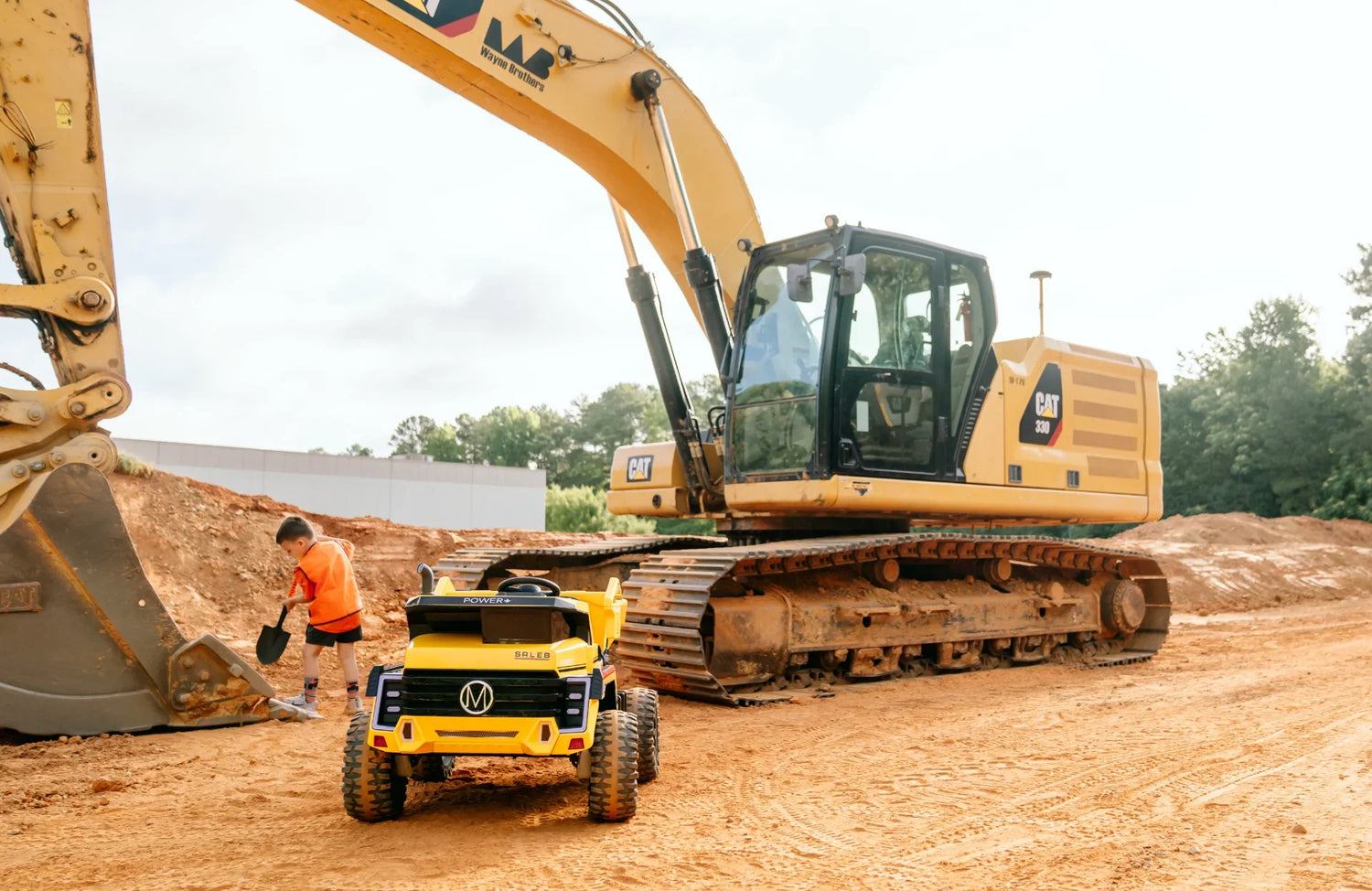
12v vs 24v 24v ride on toys for big kids
Parents, grandparents, and awesome gift-givers—this one’s for you! If you’re shopping for tough, construction-style ride-ons that can keep up with bigger kids (ages 3–8), you’ve likely wondered: Is a 12V enough, or is a 24V ride more your speed? Let’s break it down in plain English, so you can pick a rugged, joy-sparking machine kids will love for years. Vroom-vroom! 🚜💪
We’ll compare real-world differences between 12V and 24V systems, look at terrain and speed, share safety tips, and help you choose the right fit. When you’re ready, explore the construction-themed lineup at Tough Trucks For Kids—built for big imaginations and backyard jobs!
What does 12V vs 24V even mean?
Voltage (V) is the “push” behind an electric ride-on. Think of it as how strong the truck’s battery system is. In general, 12V ride-ons are great for younger riders and flat surfaces, while 24V ride-ons give bigger kids more power for grass, small hills, and heavier loads. Multiple retailers stock both 12V and 24V models in a range of body styles—ATVs, trucks, UTVs, and more—so you can match power to your rider and terrain [4].
Real-world listings for 24V rides commonly show higher top speeds and stronger acceleration than 12V peers, especially in two-seat and 4WD builds [1][2][6]. Some product pages and reviews cite top speeds around 5–6 mph, which many big kids find exciting yet manageable with adult supervision [1][5].
Who are 24V ride on toys for big kids?
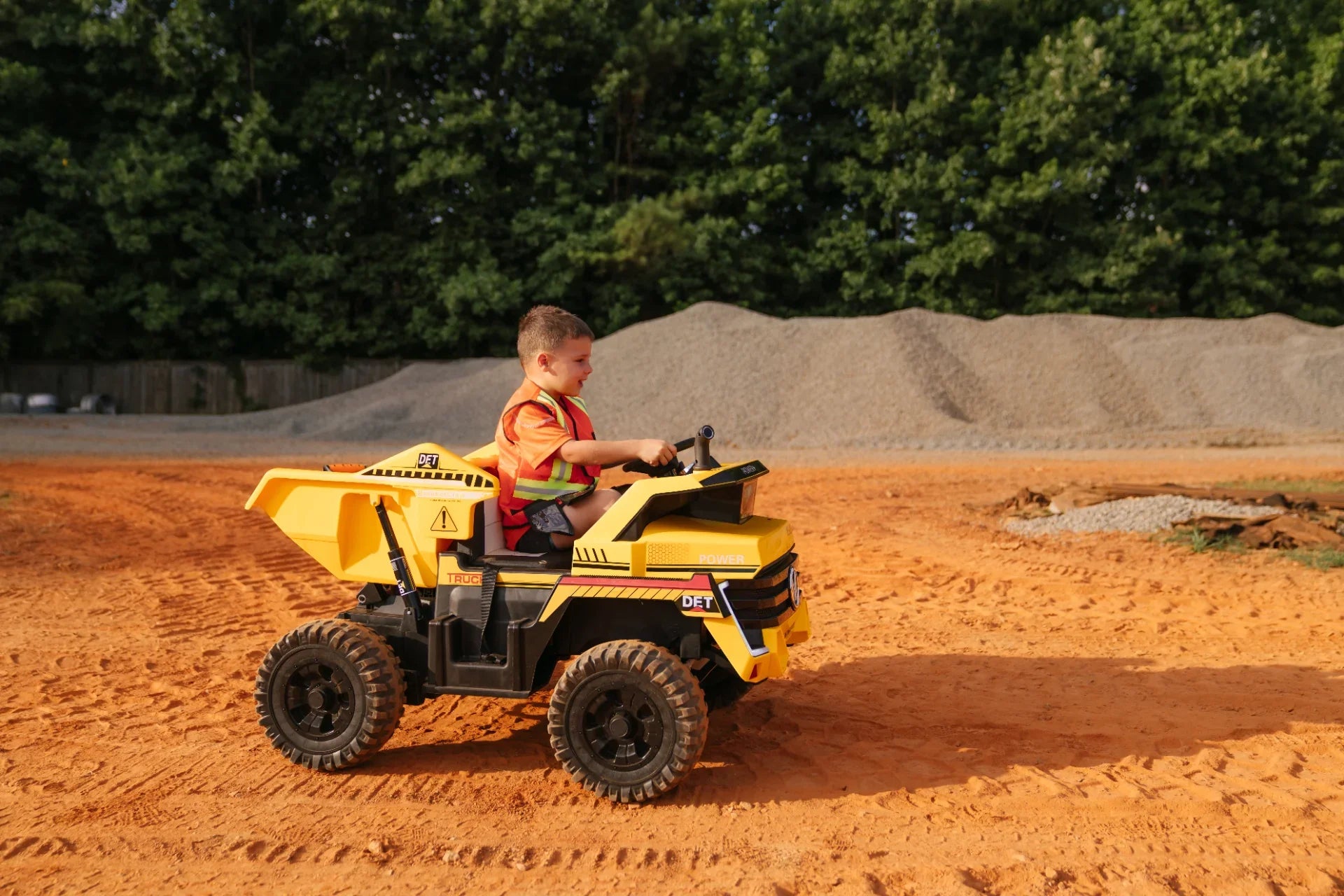
If your kid is ready for more oomph (ages roughly 5–8), 24V is often the sweet spot. Parents say 24V machines can cruise more smoothly on grass and uneven terrain compared to lighter 12V toys—an advantage that keeps playtime rolling in real backyards, not just on driveways [3].
Two-seater 24V rides are popular with siblings and friends. Many listings emphasize stronger drivetrains (sometimes 4WD), remote control options, and multi-speed setups to keep the ride fun while you stay in charge as needed [2][6]. Keep in mind that exact features vary by brand and model—always check the product page before you buy.
12V vs 24V: What really changes?
Below is the quick-hit breakdown families ask about most. Your final choice should match your child’s age, maturity, and your yard’s terrain.
Speed and acceleration
- 24V models tend to run faster and accelerate harder than 12V rides, especially with 4WD and bigger motors [1][2].
- Many 24V listings cite max speeds around 5–6 mph, which feels adventurous for big kids but is still in the toy range when used with helmets and close supervision [1][5].
- 12V rides often top out lower than that—better for brand-new drivers or very flat, smooth surfaces [4].
Terrain and torque
- 24V power helps on grass, bumps, and gentle inclines. Customer feedback often notes smoother operation on uneven surfaces compared to lower-voltage rides [3].
- Some 24V setups include 4WD, giving better traction when yards get squishy or bumpy [1][6].
- If your yard is mostly flat pavement and your rider is younger, a 12V can be perfectly fun (and may stretch battery life when speeds stay lower) [4].
Battery life and charging
- Larger batteries can extend runtime, but faster speeds and heavier vehicles also draw more power. That’s why playtime varies by rider weight, terrain, and speed mode.
- It’s common for electric ride-ons (12V and 24V) to need long initial and regular charges—some listings indicate 8–12 hours per charge cycle [5]. Always follow the manufacturer’s manual for charging and storage.
Size, seating, and weight limits
- Big kids grow fast! Families often choose 24V two-seaters so friends or siblings can ride together [2][6].
- Weight limits vary widely across models. Some listings show limits near 60 lbs, while others support more—always confirm the specs on the product page for your exact pick [5].
Parent controls and safety features
- Many 24V rides offer parental remotes, multi-speed modes, and gradual acceleration—great for learning and mixed-age households [2][6].
- Regardless of voltage, supervise closely, set speed limits early, and establish a safe riding zone with helmets and closed-toe shoes.
The real-life test: Where your kid will drive
Your backyard is the best test track! Here’s how to match voltage to your terrain and play style:
- Mostly driveway and patio: 12V is often enough for new drivers. If your rider is cautious or under 5, you’ll likely appreciate the lower speed [4].
- Mixed yard (grass + sidewalk): Go 24V to avoid stalls and keep momentum—parents report smoother rides on uneven ground [3].
- Adventure seekers and two-seaters: 24V shines with extra pull, traction, and speed options [1][2][6].
Pro tip: If you want the flexibility to start slow, look for models with multiple speed modes and parental remote control—handy for first rides and safety checks [2][6].
Choosing the right style: Construction trucks, ATVs, UTVs, and more
Kids love role-play—dumping, hauling, digging, and forklift “jobs” turn backyards into busy worksites! Many 24V listings across the market span ATVs, side-by-sides, SUVs, and trucks, so you can pick the vibe your kid loves most [1][2][4][6].
Ready to shop construction themes? Roll out the heavy equipment at Tough Trucks For Kids:
- Want a kid-powered dump site? Check out the Ride On Dump Truck.
- Budding farmers at home? Explore the Kids Tractor Ride On.
- Little warehouse boss? Meet the Kids Forklift Ride On.
Not sure which is right? Browse the full Ride-On Toys Collection to compare builds side-by-side.
Safety first: Simple rules for big fun
You’re the safety chief! Set the rules on day one and keep them fun and firm.
- Gear up: Helmets and closed-toe shoes every ride. Consider knee and elbow pads if terrain is rough. For broader toy-safety guidance, see tips from the Consumer Product Safety Commission and other child-safety groups (for example, these resources from the CPSC, Safe Kids Worldwide, and Consumer Reports).
- Set the zone: Keep riding away from streets, driveways that slope into roads, and water. Design a “track” with cones or chalk!
- Start slow: Use lower speed settings until kids master steering and braking. Many 24V rides include parent remotes and speed limiters—use them [2][6].
- Charge smart: Follow the manual. Typical listings suggest long charge times (often 8–12 hours), so plan charging overnight and store batteries properly [5]. For more general toy-buying safety insight from pediatricians, check the AAP’s tips on choosing safe toys (HealthyChildren.org).
12V still has a place—here’s when
- Younger drivers (around ages 3–5) who are just learning may feel more confident in a 12V ride’s gentler pace [4].
- Flat, smooth surfaces let 12V models shine with fewer stalls and potentially longer runtimes at lower speeds.
- If you want to build skills first, start with a 12V model that offers parental control or speed limits, then step up to 24V later [2][6].
Bottom line: 12V can deliver tons of smiles for littler riders, while 24V opens the gate to bigger adventures.
How to choose the best 24V ride-on for your big kid
Use this simple checklist to find a match that’ll go the distance.
1) Fit the rider and seating
- Do you need a one-seater or two-seater? Bigger kids often want to bring a buddy—24V two-seaters are a popular pick [2][6].
- Check the product page for dimensions and weight limits (these vary widely by model) [5].
2) Match the motor to your yard
- Grass and gentle hills? 24V typically handles these better than 12V [3].
- If you see frequent mud or soft patches, look for 24V builds advertised with 4WD for more traction [1][6].
3) Start with control
- Parental remotes and multi-speed modes make early rides smoother and safer [2][6].
- Teach hand signals, braking, and “ride-zone” rules before kids go solo.
4) Plan the power
- Expect long initial and regular charges—listings often mention 8–12 hours [5].
- Follow the manual’s guidance for battery storage, charging frequency, and off-season care.
5) Support you can count on
- Look for clear assembly guidance, responsive customer service, and straightforward warranties. When in doubt, shop reputable retailers that specialize in ride-ons and clearly list specs and support options [4].
Ready to explore construction-themed rides? Head to Tough Trucks For Kids and browse the Ride-On Toys Collection. Check https://toughtrucksforkids.com website for current details.
Tough Trucks picks for big kids who love to build, haul, and dig
For families who want rugged, real-world play, construction vehicles are a slam dunk. They invite kids to imagine jobs, plan routes, and solve problems—skills that grow with every ride.
- Ride On Dump Truck: A backyard classic for hauling leaves, toys, and sand.

- Kids Tractor Ride On: Perfect for garden helpers and farm fans.

- Kids Forklift Ride On: Load, lift, and move “pallets” around the driveway.

Tip: If you’re gifting, add cones, pretend pallets, or mini hardhats to build a full jobsite. Pair with clear rules and a “license” ceremony to make safety part of the fun.
24V ride-on features families often consider
While every model is different, these are common 24V talking points across listings:
- Two-seater layouts for siblings and playdates [2][6]
- Multiple speed modes with parental overrides [2][6]
- 4WD options for traction on grass and rough patches [1][6]
- Speeds commonly cited around 5–6 mph in many listings [1][5]
- Long charge times (often 8–12 hours) with manufacturer guidance on charging and storage [5]
Remember: Always confirm the exact features and specs on the product page you’re buying from.
Care, charging, and storage: Keep it rolling all year 🚧
- Charge by the book: The first charge and regular top-ups matter. Many listings mention overnight charge windows (e.g., 8–12 hours), but follow your manual [5].
- Store smart: Keep batteries and chargers off the ground in a dry, temperate spot. Avoid over-discharging.
- Pre-ride checks: Look over tires, seatbelts, and controls. Make sure the driving area is clear of hazards.
- Off-season prep: Clean the toy, charge fully, and store where you can easily maintain monthly top-offs.
For general battery and device safety pointers, see trusted resources such as UL’s battery safety tips and the CPSC’s toy safety center.
Gift guide: How to pick a winner for birthdays and holidays 🎁
- Measure your space: Will it live in a garage, shed, or covered porch? Can it turn around in your driveway?
- Match the theme: Construction gear is always a hit—dump trucks, tractors, and forklifts invite hours of pretend play.
- Plan add-ons: Cones, chalk tracks, and safety vests make play bigger. Don’t forget a helmet!
- Set expectations: Make a “family driver’s test” part of the gift. Kids love earning their license to roll.
When you’re ready to put a bow on it, browse Tough Trucks For Kids for hardworking designs that look the part and bring the fun. Check https://toughtrucksforkids.com website for current details.
The bottom line: 12V vs 24V for big kids
- Pick 12V for first-time drivers, flat surfaces, and slower, gentler rides [4].
- Choose 24V for bigger kids, mixed terrain (including grass), two-seater fun, and more punch [1][2][3][6].
- Expect commonly listed top speeds around 5–6 mph for 24V models, with long charge times—check each model’s page to confirm [1][5].
Looking for tough, construction-themed fun that lasts? Fire up their imagination with a rugged ride from Tough Trucks For Kids. Explore the Ride-On Toys Collection and pick the perfect machine today. Check https://toughtrucksforkids.com website for current details.
References
- Wayfair: 24V 4WD ATV listing (max ~5.6 mph, 2-seat)
- Big Toys Direct: 24V 2-Seater Mercedes-Benz G63 Ride-On with Remote
- Walmart Reviews: 24V Excavator Ride-On with Remote
- KIDS VIP: 12V and 24V Ride-On Vehicles Retailer
- DMC Nordic: 2-Seater Electric Ride-On Specs and Reviews
- Walmart Reviews: 24V 9Ah 4WD 2-Seater Ride-On (remote and speeds)
Frequently Asked Questions
Is 24V too fast for a 5-year-old?
It depends on your child and the model. Many 24V listings cite top speeds around 5–6 mph, which can feel fast for beginners. Start in the lowest speed, use parental controls if included, and supervise closely. Always check the product page for exact specs and recommendations.
How long does a ride-on battery take to charge?
Charge times vary by brand and battery size. Many listings show 8–12 hours per charge, especially for initial charges. Follow the manual for your specific model and keep batteries stored and maintained as directed.
Do I need 4WD for my yard?
If you have thick grass, soft patches, or gentle hills, 4WD can help with traction and momentum. For flat driveways or patios, 2WD is often enough. Check the terrain demands and your child’s riding style before deciding.
Are two-seater 24V ride-ons worth it?
Two-seaters are great for siblings or playdates and can make rides more social. They’re often found in 24V setups and may include parental remotes and multiple speed modes—features many families appreciate. Always verify the seating, weight limits, and features on the product page.
Where can I find construction-themed ride-ons?
Explore the construction lineup at Tough Trucks For Kids, including a Ride On Dump Truck, Kids Tractor Ride On, and Kids Forklift Ride On. Check the website for current details before ordering.

Leave a comment
This site is protected by hCaptcha and the hCaptcha Privacy Policy and Terms of Service apply.