
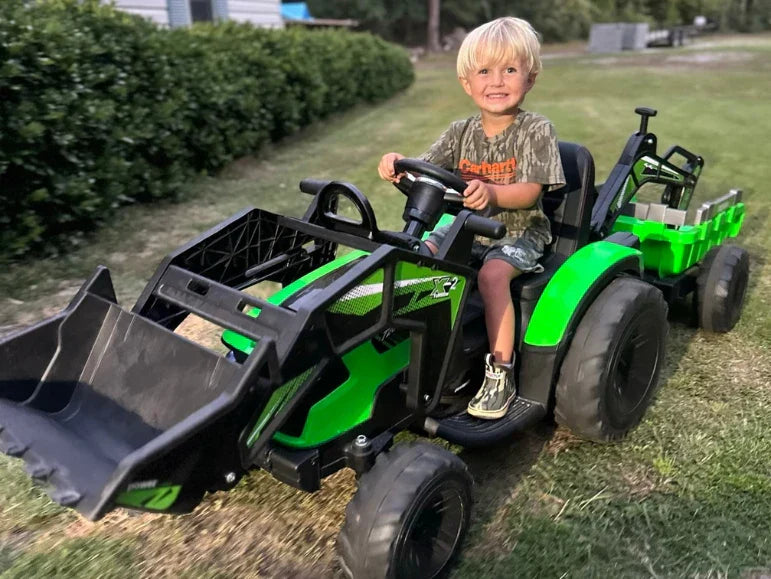
If you've ever watched your toddler's eyes light up at the sight of a construction truck, you know that feeling. That spark of curiosity, that urge to climb in and take control. But then comes the question every parent asks: is my child actually ready for a ride-on toy?
The answer isn't just about age on a box. It's about developmental milestones, motor skills, safety awareness, and finding the right match between your child's abilities and the toy's features. In 2026, electric ride-on toys have evolved far beyond the basic push cars of previous generations. Today's ride-on construction vehicles offer real working functions, parent controls, and thoughtful safety features that make them accessible to children as young as one year old—when matched correctly.
This guide breaks down exactly what to look for at each age and stage, from your curious one-year-old to your adventurous eight-year-old. We'll explore the developmental markers that signal readiness, the safety features that matter most, and how to choose a ride-on toy that grows with your child's confidence and coordination.
When Can Toddlers Start Using Ride-On Toys?
The earliest most children can safely enjoy electric ride-on toys is around 12-18 months, but there's an important caveat: the vehicle must be specifically designed for this age group. We're not talking about handing a toddler the keys to a high-powered utility vehicle. We're talking about ride-ons engineered with toddler-specific features that prioritize stability, lower speeds, and intuitive controls.

At this stage, your toddler is developing critical gross motor skills. They're learning to balance, coordinate their legs for walking and climbing, and beginning to understand cause and effect. A well-designed toddler ride-on toy supports these developmental leaps while keeping safety front and center.
Developmental Milestones That Signal Readiness (Ages 1-3)
Before introducing any ride-on toy to your toddler, watch for these key developmental markers. First, your child should be walking confidently and independently. They don't need to be marathon runners, but they should have stable, coordinated steps without frequent tumbles. Second, look for basic understanding of directional concepts—when you say "forward" or "stop," they might not obey perfectly, but they should show some comprehension.
Hand-eye coordination is another major factor. Can your child grasp objects intentionally and manipulate simple controls like buttons or levers? Do they show interest in "driving" or operating vehicles during play? These are all green lights. Finally, and perhaps most importantly, they should be able to sit upright unsupported for extended periods. A toddler who's still wobbly when seated isn't ready for the responsibility of controlling a moving vehicle, even at low speeds.
The Right First Ride-On: What to Look For
For the 1-3 age range, you need a ride-on that's built from the ground up for little ones. The Little Ones First Digger is purpose-built for this exact stage. It runs on a 6V battery system, which translates to a gentle 3.5 mph maximum speed—fast enough to feel exciting, slow enough for parents to keep pace on foot.
What makes it safe for toddlers? The low center of gravity prevents tipping, even when little ones lean to one side or shift their weight suddenly. The excavator arm is functional but scaled appropriately for small hands, teaching cause and effect without overwhelming their developing motor skills. The controls are toddler-friendly: simple, intuitive, and designed for hands that are still mastering fine motor precision.
Weight capacity matters here too. At 66 pounds, this vehicle can accommodate a growing toddler well into their third year. And because it ships as a pre-order (arriving February 9, 2026), you can plan ahead for that upcoming birthday or milestone.
Are Ride-On Toys Safe for 2-Year-Olds?
This is one of the most common questions we hear from parents, and it deserves a thorough answer. Yes, ride-on toys can absolutely be safe for 2-year-olds—when you choose the right vehicle and supervise appropriately. The keyword here is "appropriate."

A 2-year-old is in a fascinating developmental window. They're more confident in their physical abilities than they were at one, but they still lack the judgment and impulse control of older children. They might stomp on the accelerator without looking ahead. They might decide to experiment with driving backward down a slope. This doesn't mean they shouldn't have ride-on toys—it means they need the right ones, with the right safety systems in place.
Essential Safety Features for the 2-Year-Old Age Group
Parent remote control is non-negotiable for this age. Even with a vehicle designed for toddlers, you want the ability to override their controls if they're heading toward the flower bed or getting too close to a sibling. A quality ride-on for this age group should include a remote that lets you steer, stop, and control speed from a distance.
Look for vehicles with a low center of gravity and wide wheelbase. Two-year-olds are still developing their sense of balance and spatial awareness. They'll lean, shift, and move unpredictably. A wide, stable base compensates for this and dramatically reduces tip-over risk. Speed limitation is equally critical. You want maximum speeds in the 3-4 mph range—quick enough to be engaging, manageable enough to react if something goes wrong.
Soft-start technology prevents that jarring lurch when little feet hit the pedal. Instead of shooting forward, the vehicle accelerates gradually. This gives your toddler time to adjust their grip and posture, and it saves you from a dozen heart-stopping moments. Finally, prioritize vehicles with smooth, wide tires—EVA foam is ideal—that won't slip or skid unpredictably on grass, gravel, or pavement.
Supervision Is Part of the Safety Equation
Even the safest ride-on toy requires engaged supervision for 2-year-olds. This isn't helicopter parenting—it's recognizing that toddlers are still learning about boundaries, consequences, and risk assessment. Stay within arm's reach during the first several sessions. Create a clear, obstacle-free play area away from driveways, slopes, pools, and streets. As your child demonstrates control and understanding, you can gradually increase their independence. But at this age, supervision isn't optional—it's part of how the toy functions safely.
Ages 3-5: The Sweet Spot for Electric Ride-On Adventures
Around age three, something shifts. Your child's coordination improves dramatically. Their attention span lengthens. They start to understand rules, follow multi-step directions, and show genuine problem-solving skills. This is when electric ride-on toys truly come alive as learning tools, not just entertainment.

At this age, children are ready for 24V ride-on systems with real working features. They can handle higher speeds (4-5 mph), more complex controls, and vehicles that actually do something beyond just driving. Think dump beds that lift and lower. Forklifts that pick up and carry real objects. Tractors with working scoops and diggers. These aren't just toys anymore—they're tools for imaginative play, physics lessons, and confidence building.
What Changes Between Ages 3 and 5?
Motor skills take a major leap forward during these years. Three-year-olds can steer with intention, understand forward and reverse, and begin to navigate around obstacles. By five, they're coordinating steering, speed control, and spatial awareness simultaneously. They can back up to align a dump bed, position a forklift precisely, or navigate a self-created obstacle course with real planning.
Cognitive development matters just as much. Preschoolers begin to grasp concepts like momentum, weight distribution, and mechanical cause-and-effect. When they operate a Forklift 9000 and discover they can't lift more than 22 pounds, they're learning physics. When they dump a load of mulch and watch it slide down the bed of the Big Kahuna Dump Truck, they're experimenting with gravity and angles.
This age group also develops a sense of purpose in their play. They don't just want to drive—they want to build something, haul something, accomplish something. Ride-on toys with working features transform generic "driving around" into mission-driven play that holds their attention for hours.
Best Ride-Ons for Ages 3-5
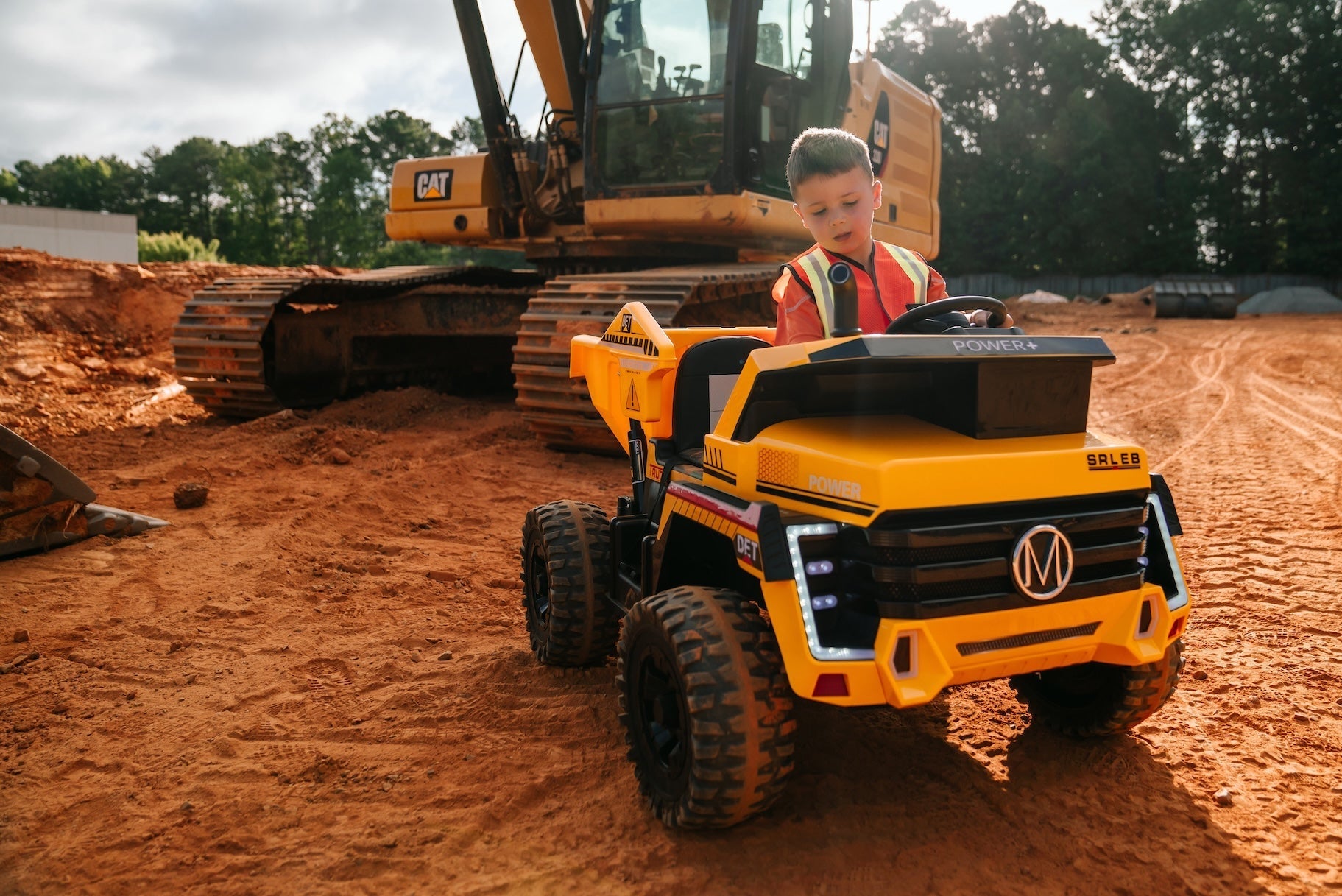
The Big Kahuna Dump Truck is a standout choice for this age range. With dual 550W motors and a 24V battery system, it reaches 4.5 mph—fast enough to feel powerful, controlled enough to stay safe. The working electric dump bed is the killer feature here. Kids can load it with dirt, rocks, toys, or leaves, drive to their destination, and dump the load with the push of a button. The LED lights add a touch of realism that makes them feel like they're operating the real thing.
For children drawn to mechanical puzzles, the Forklift 9000 offers something special. It's rated for ages 3-8, and there's a reason for that wide range: the learning curve is built in. A three-year-old will start by learning to drive and lift the forks up and down. By five, they're stacking objects, creating challenges for themselves, and developing spatial reasoning that would make an engineer proud. The stable base and cabin protection mean parents can relax a bit while kids experiment.
Both vehicles include parent remote controls—still useful for this age group, especially when learning. You can intervene if they're about to crash into the fence or help them navigate a tricky reverse maneuver until they get the hang of it.
Ages 6-8: Advanced Skills and Real-World Simulation
By age six, most children have the physical coordination and cognitive maturity to handle advanced ride-on vehicles with minimal intervention. They understand consequences, can predict outcomes, and possess the judgment to navigate more complex terrain and challenges. This is when ride-on toys transition from guided play to independent adventure.

At this stage, kids are ready for vehicles that closely simulate real-world equipment. The Big Digger Tractor (currently sold out but worth waiting for) offers both a front scooper and a rear digger, giving children two distinct tools to master. They're not just playing construction—they're learning how different tools serve different purposes, how to switch between functions, and how to plan multi-step projects.
The Mongoose ATV Quad adds another dimension entirely. With a touchscreen control center and Bluetooth connectivity, it bridges outdoor physical play with the tech-savvy world older kids are growing into. The four-wheel shock absorbers mean they can tackle rougher terrain—gravel paths, gentle hills, uneven grass—that would have been off-limits at younger ages.
What to Expect from 6-8 Year-Olds on Ride-Ons
Independence is the defining characteristic of this age group. They want to explore, experiment, and push boundaries. They'll create elaborate scenarios: construction sites with work zones, delivery routes with stops and schedules, rescue missions with obstacles to overcome. This kind of imaginative play builds executive function skills—planning, organizing, problem-solving, and adapting when things don't go as expected.
Physical capabilities are also at their peak for ride-on toys. Six to eight-year-olds can handle higher speeds, tighter turns, and more nuanced control. They understand how to modulate pressure on the pedal for different speeds. They can judge distances and angles well enough to park precisely or navigate narrow spaces. And they have the arm strength and coordination to operate working features—lifting, dumping, scooping—with real control.
This is also the age where kids start to care about realism. They notice details. They want their ride-on to look, sound, and function like the real equipment they see on construction sites or farms. Vehicles with authentic engine sounds, realistic controls, and genuine working capabilities earn their respect and hold their interest far longer than generic toy versions.
Safety Considerations for Older Children
Even though 6-8 year-olds are more capable, safety still matters—it just looks different. At this age, the focus shifts from preventing accidents to teaching responsible operation. Establish clear boundaries for where they can ride. Set rules about speed in different areas (slower near the house, faster in open yard space). Teach them to check their surroundings before moving, especially when reversing or turning.
Weight capacity becomes more relevant here too. Many children in this age range are approaching or exceeding 70 pounds. Make sure the vehicle you choose can handle their current weight with room to grow. The Big Kahuna Dump Truck, for instance, has a 100-pound capacity, giving you several years of use even for larger or taller kids.
How to Know Your Child Is Ready: Universal Readiness Signs
Regardless of age, certain readiness markers apply across the board. Physical readiness means your child can sit comfortably in the seat with feet reaching the pedals and hands able to grip the steering wheel without straining. They should be able to get in and out of the vehicle independently—not because you won't help them, but because being able to exit quickly if needed is a safety consideration.

Cognitive readiness is equally important. Does your child understand and follow basic safety instructions? Can they stop when you say stop? Do they look where they're going rather than at their hands or feet? Can they identify potential hazards like slopes, obstacles, or other children in their path?
Emotional readiness is the piece parents sometimes overlook. Some children are naturally cautious and will ease into a new ride-on slowly and carefully. Others are bold and impulsive, requiring more supervision and clearer boundaries. Neither temperament is wrong, but knowing your child's personality helps you choose the right vehicle and set appropriate expectations.
Interest level also matters. A child who's genuinely excited about construction vehicles, tractors, or outdoor adventure will engage more deeply with a ride-on toy. They'll be more motivated to learn the controls, follow safety rules, and take care of their vehicle. If you're forcing it because you think they should want one, you're probably jumping the gun.
Choosing the Right Ride-On for Your Child's Age and Stage
Matching your child to the right ride-on isn't just about checking the age range on the product page. It's about understanding where your specific child is in their development and what features will support their growth without overwhelming them.
For toddlers (1-3 years), prioritize safety over features. Lower voltage (6V), slower speeds, parent remote control, and extreme stability are your non-negotiables. Working features should be simple and intuitive—like an excavator arm they can move with a basic lever. The goal is to build confidence and coordination without introducing unnecessary risk or complexity.
For preschoolers (3-5 years), you can step up to 24V systems with moderate speeds (4-5 mph) and meaningful working features. This is the age where dump beds, forklifts, and scoops really shine. Look for vehicles that support imaginative play scenarios—hauling, building, rescuing. Parent remote controls are still valuable but may be used more as a safety backup than constant intervention.
For elementary-aged kids (6-8 years), focus on vehicles that offer complexity and challenge. Multiple working features, higher weight capacities, authentic details, and the ability to handle varied terrain will keep them engaged. Consider their interests too. A child fascinated by tractors and farming will get more from the Big Digger Tractor than from an ATV, even if both are age-appropriate.
The Tough Trucks Difference: Why Quality Matters at Every Age
Not all ride-on toys are created equal, and this is especially true when it comes to safety and longevity. As a veteran-owned business specializing exclusively in ride-on construction vehicles, Tough Trucks For Kids focuses on building vehicles that last through multiple children and years of outdoor play. The 90-day bumper-to-bumper warranty reflects confidence in the build quality. Higher-quality materials than big-box alternatives mean these vehicles withstand the roughhousing, weather exposure, and creative experimentation that kids put them through.
Every vehicle ships 80% pre-assembled, arriving in 2-5 days from the LA warehouse. This matters because you're not spending hours deciphering confusing instructions when your child is bouncing with anticipation. Setup takes 30-45 minutes, and you're done. American-based customer support means when you have questions—and you will—you're talking to someone who knows these products inside and out, not reading from a script in a call center overseas.
From the parent's perspective, quality translates to peace of mind. EVA tires won't go flat or tear up your lawn. Dual motors provide consistent power and control. LED lights and realistic sounds aren't just gimmicks—they're details that make children feel like they're operating real equipment, which encourages more engaged, focused play.
Frequently Asked Questions About Ride-On Toy Ages
What age can a child ride a ride-on toy?
Children can start using ride-on toys as early as 12-18 months, provided the vehicle is specifically designed for toddlers. Look for 6V systems with maximum speeds around 3-4 mph, low centers of gravity, parent remote controls, and toddler-friendly controls. The Little Ones First Digger is purpose-built for ages 1-3. By age 3, most children are ready for 24V ride-ons with more advanced features like the Big Kahuna Dump Truck or Forklift 9000.
Are ride-on toys safe for 2-year-olds?
Yes, ride-on toys can be safe for 2-year-olds when you choose age-appropriate vehicles with proper safety features. Essential elements include parent remote control, low center of gravity, wide wheelbase, speed limitation (3-4 mph maximum), and soft-start technology. Constant supervision is required at this age. Choose vehicles specifically rated for toddlers rather than trying to use a ride-on designed for older children.
When can toddlers use electric ride-on toys?
Toddlers can begin using electric ride-on toys around 12-18 months if they're walking confidently, can sit upright unsupported, show basic hand-eye coordination, and demonstrate interest in operating vehicles. The ride-on must be toddler-specific with a 6V battery system, extremely stable base, and parent remote override. Always supervise closely and create a safe, obstacle-free play area. Wait until your child shows all the developmental readiness signs rather than rushing based on age alone.
What's the difference between 6V and 24V ride-on toys?
The voltage determines the power, speed, and intended age group. 6V ride-ons are designed for toddlers ages 1-3, reaching maximum speeds of 3-4 mph with gentler acceleration and simpler controls. 24V ride-ons are built for ages 3-8, offering speeds of 4-5 mph, dual motors for better performance, and the power to operate working features like dump beds and forklifts. The higher voltage also supports greater weight capacities and more challenging terrain. Never use a 24V vehicle for a toddler—the speed and power are inappropriate and unsafe for their developmental stage.
How long do kids typically play with electric ride-on toys?
With the right vehicle, children can enjoy electric ride-ons from as early as 18 months through age 8 or beyond. The key is choosing a ride-on with a wide age range and weight capacity that allows for years of growth. For example, the Forklift 9000 and Big Kahuna Dump Truck are both rated for ages 3-8 and have weight capacities of 80-100 pounds, meaning many children will use them for 4-6 years. Quality construction matters here—cheaper alternatives may break down within a year or two, while well-built vehicles like those from Tough Trucks For Kids can last through multiple children and still have resale value.
Ready to Find the Perfect Ride-On for Your Child?
Choosing the right ride-on toy isn't about picking the flashiest option or the one with the most features. It's about understanding your child's developmental stage, matching their abilities to the right vehicle, and giving them a tool that challenges them appropriately while keeping safety paramount.
Whether you're starting with a toddler-friendly excavator for your curious one-year-old or upgrading to a powerful dump truck for your adventurous five-year-old, the right ride-on toy becomes more than entertainment. It's a teacher, a confidence-builder, and a gateway to screen-free outdoor play that develops real-world skills.
Browse the complete collection of age-appropriate ride-on construction vehicles and find the perfect match for your child's next big adventure. Every vehicle comes with a 90-day bumper-to-bumper warranty, ships 80% pre-assembled, and arrives in 2-5 days from our LA warehouse. Plus, our American-based customer support team is here to answer questions and help you choose wisely.

Dejar un comentario
Este sitio está protegido por hCaptcha y se aplican la Política de privacidad de hCaptcha y los Términos del servicio.