
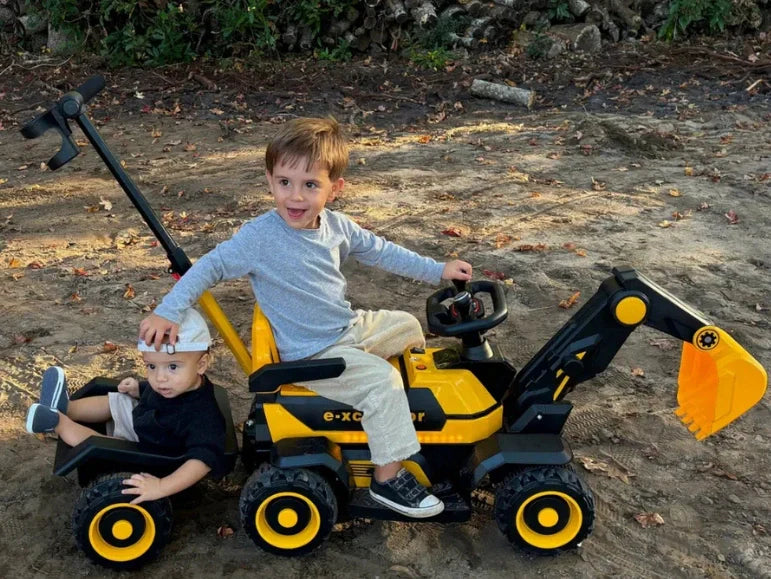
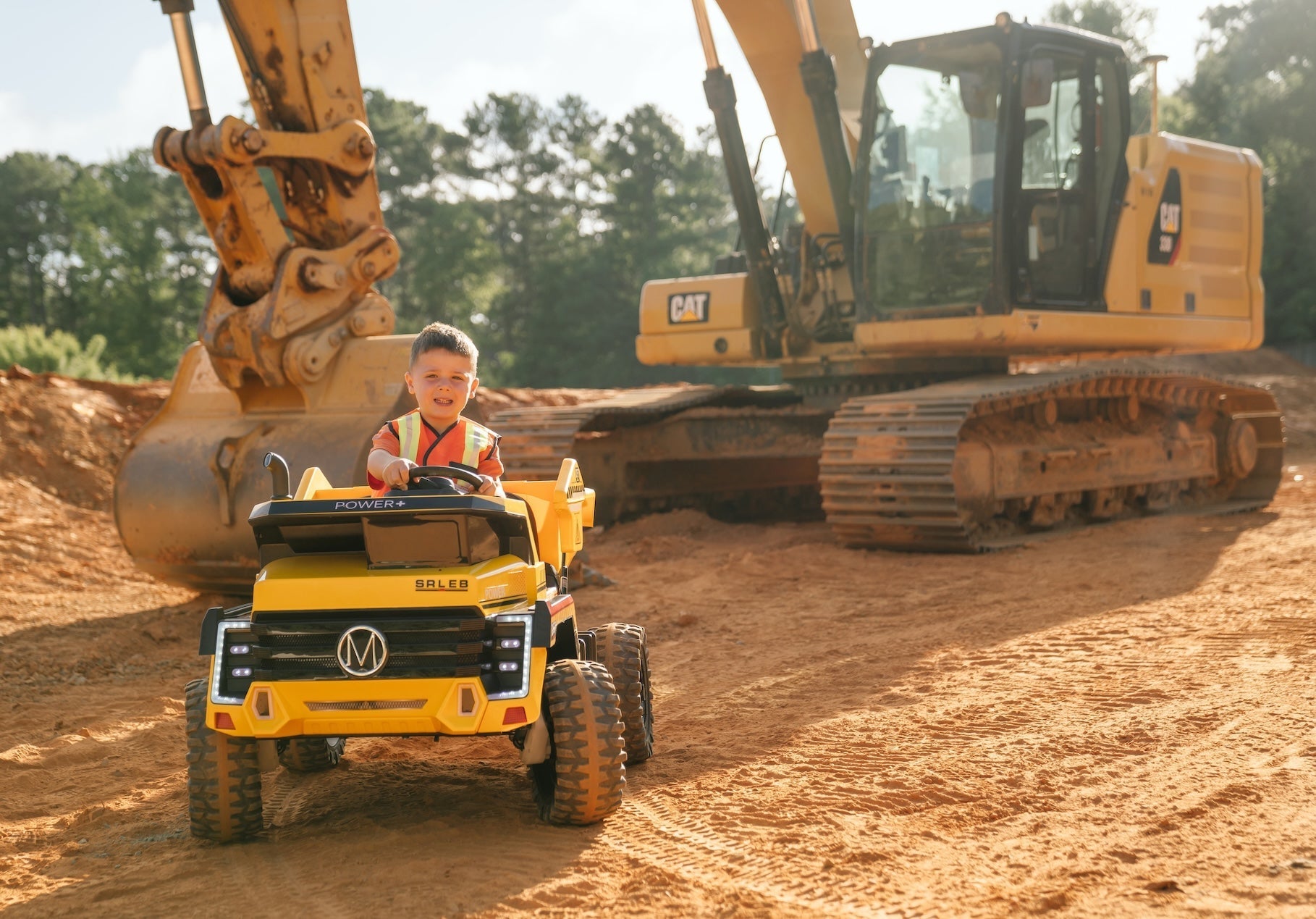
There is something about excavators that stops children in their tracks. Not trucks. Not cars. Not even fire engines with their flashing lights and sirens. When a toddler spots a real excavator on a construction site — that long hydraulic arm swinging through the air, the bucket scooping earth with mechanical precision, the cab rotating on its base — they are transfixed. They point. They stare. They refuse to leave until the machine does. And inevitably, within days, their parents hear the question: can I have one?
In 2026, the answer is yes. Excavator ride-on toys have evolved from flimsy plastic sit-ons into genuine motorized vehicles with working excavator arms, electric drive systems, and the kind of build quality that holds up to the enthusiasm of a child who wants to dig every single day. But with options ranging from simple push-along models to sophisticated 24V construction vehicles, finding the right excavator ride-on toy for your child requires understanding what makes this category special, what age is appropriate for excavator ride-on toys, and which features actually matter versus which are just marketing noise.
This guide covers all of it. Whether your one-year-old is just discovering the magic of cause-and-effect play or your five-year-old is ready for a full-scale excavation operation in the backyard, we will walk you through what excavator ride-on toys are, why kids are obsessed with them at a psychological level, how they support genuine child development, and how to choose the best excavator ride-on toy for your child's age, interests, and your budget in 2026.

What Is an Excavator Ride-On Toy?
An excavator ride-on toy is a battery-powered or manual ride-on vehicle designed to replicate the look and function of a real excavator or digger. What sets excavator ride-ons apart from other ride-on toys — dump trucks, tractors, ATVs — is the working arm. The defining feature of every quality excavator ride-on is a mechanical arm that the child operates directly, using levers or controls to raise, lower, swing, and scoop. This is not a decorative attachment. On a well-built excavator ride-on, the arm actually works, and the child is the operator.
If you are new to the ride-on toy category entirely, our complete guide to what ride-on toys are covers the full landscape — from battery types to vehicle categories to how these differ from traditional outdoor toys. But here is the short version: modern ride-on toys are motorized vehicles that children sit in and drive using a steering wheel, gas pedal, and working controls. They are powered by rechargeable batteries (typically 6V for toddlers and 24V for older children) and come equipped with features like parent remote controls, LED lights, realistic engine sounds, and — in the case of construction-themed ride-ons — working mechanical components.
Excavator ride-on toys occupy a unique position in this category because they combine driving with a second, entirely separate system of controls: the excavator arm. This dual-control setup creates a play experience that is fundamentally richer than a ride-on that only drives. Children must learn to operate the vehicle and the arm, sometimes simultaneously, which introduces layers of coordination, planning, and problem-solving that you simply do not get from a ride-on focused purely on mobility.
Why Kids Are Obsessed With Excavators
Ask any parent of a construction-obsessed child: the fascination with excavators is something different. It is deeper and more enduring than interest in most other vehicles. There are developmental and psychological reasons for this, and understanding them helps explain why excavator ride-on toys consistently rank among the most-wanted items in the ride-on category.
The Power of Functional Play
Children are wired to understand their world through action. Developmental psychologists call this "functional play" — the drive to use objects for their intended purpose rather than simply holding, throwing, or stacking them. A ball rolls. A block stacks. But an excavator digs. It scoops. It lifts. It deposits. The excavator is one of the most visually dramatic examples of functional machinery a child encounters in daily life. Every movement of the arm has a clear purpose and a visible result. Dirt moves from one place to another. A hole appears where flat ground used to be. The cause-and-effect relationship is immediate, tangible, and deeply satisfying to a developing brain.
When a child operates an excavator ride-on toy with a working arm, they are not pretending to dig — they are actually digging. This distinction matters enormously in child development. Pretend play is valuable, but functional play, where the toy actually performs its real-world function, creates stronger neural connections because the child's expectation and the outcome align perfectly. Push the lever, the arm moves. Scoop the sand, the bucket fills. Raise the arm, the sand lifts. The feedback loop is complete and concrete, which is exactly the kind of learning experience young brains crave.
Sensory Feedback and the Joy of Digging
There is a sensory dimension to excavator play that parents sometimes overlook. Digging engages multiple senses simultaneously: the visual feedback of watching earth move, the tactile sensation transmitted through the controls, the sounds of the mechanism and the material being scooped, even the proprioceptive feedback of operating levers against resistance. For children who are still building their sensory integration skills — which includes virtually all children under age six — this multi-sensory experience is genuinely nourishing.
Why kids love excavator ride-on toys often comes down to something beautifully simple: children love dirt, and excavators give them a powerful, purposeful way to interact with it. In an era where screen time increasingly dominates childhood, the excavator ride-on represents a compelling counter-offer. It is outdoor play. It is physical play. It is constructive play. And it is endlessly repeatable because there is always more to dig.

Construction Site Fascination
Children between the ages of one and eight are in a period of intense world-building. They are trying to understand how the physical world works — how things are made, how things change, how people use tools and machines to shape their environment. Construction sites are one of the most accessible, dramatic demonstrations of this process that a child encounters. Buildings appear where empty lots used to be. Roads get built. Earth gets moved. And the excavator is almost always the star of the show — the first machine on site and often the last to leave, doing the most visually impressive work.
An excavator ride-on toy lets a child step into that narrative. They are not watching the construction site from the car window anymore. They are the operator. Their backyard becomes the job site. Their sandbox becomes the excavation zone. This transition from observer to participant is a powerful psychological shift that drives the deep, sustained engagement parents notice when their child climbs into an excavator ride-on and simply does not want to get out.
How Excavator Ride-On Toys Help Child Development
The benefits of excavator ride-on toys extend well beyond entertainment. The unique combination of driving, arm operation, and purposeful digging play creates developmental opportunities that are difficult to replicate with other types of toys. Our guide to how ride-on toys support child development covers the broader category in detail, but excavator ride-ons offer several specific advantages worth highlighting.
Fine and Gross Motor Development
Operating an excavator ride-on toy engages both fine and gross motor systems simultaneously. Driving the vehicle requires gross motor coordination — steering with both arms, pressing the gas pedal with the foot, maintaining postural balance in the seat while the vehicle moves. These are the same large-muscle-group skills that riding a bike or playing on a playground develops. But the excavator arm adds a fine motor layer that most other ride-ons lack. Operating the arm's levers requires precise, controlled hand movements. Scooping material demands carefully calibrated pressure and timing. Depositing a load in a specific location requires spatial precision and hand-eye coordination.
This dual-engagement is particularly valuable for toddlers, whose fine and gross motor systems are developing rapidly and benefit from activities that challenge both at once. A toddler operating the Little Ones First Digger is simultaneously building core strength (sitting upright and balancing), bilateral coordination (steering with both hands), foot-eye coordination (operating the pedal), and fine motor control (manipulating the excavator arm) — all while thinking they are simply playing.
Cause-and-Effect Learning and Early STEM Foundations
The working excavator arm is one of the most effective cause-and-effect teaching tools available in the ride-on category. Every action produces an immediate, visible, and predictable result. Push the lever forward and the arm extends. Pull it back and the arm retracts. Rotate the wrist control and the bucket angles. These are not abstract concepts being explained on a screen — they are physical, tangible mechanics that a child operates with their own hands and observes with their own eyes.
For older children, excavator play naturally introduces concepts from physics and engineering. How does leverage work? Why is it easier to scoop loose sand than packed dirt? What happens when you try to lift a load that is too heavy? How does the angle of the bucket affect how much material it holds? Children do not think about these questions in scientific terms, but they encounter them in practice, and the hands-on experience builds intuitive understanding that serves as a foundation for formal STEM learning later. This is exactly the kind of "educational adventure play" that sets purposeful ride-on toys apart from generic entertainment.
Problem-Solving and Executive Function
Excavator play is inherently goal-oriented. Children do not just sit and drive in circles — they set themselves tasks. Dig a hole. Fill a bucket. Move sand from here to there. Build a mound. Clear a channel. Each task requires planning (where to dig, where to dump), sequencing (drive to the dig site, position the arm, scoop, drive to the dump site, release), and adaptation (the bucket missed, try again at a different angle). These are executive function skills — the cognitive capacities that help children plan, organize, and complete tasks — and they are among the most important predictors of academic and life success.

What Age Is Appropriate for an Excavator Ride-On Toy?
One of the most common questions parents ask is what age is appropriate for an excavator ride-on toy. The answer depends on the specific vehicle, but the excavator category is unique because it spans a wider age range than most ride-on types — starting as young as one year old and extending through age eight with different vehicles designed for different developmental stages. For a comprehensive breakdown of age-appropriate ride-on selection across all categories, our ride-on toy age guide is an excellent resource.
Ages 1-3: The Toddler Entry Point
The best excavator ride-on toy for toddlers is specifically engineered for developing bodies and minds. At this stage, children are still mastering walking, building basic hand-eye coordination, and learning the foundational concept of cause and effect. An excavator ride-on for this age group needs to be slow enough that a parent can keep up on foot, stable enough to handle the unpredictable weight shifts of a toddler, and simple enough that small hands can operate the controls without frustration.
The Little Ones First Digger was designed from scratch for this exact developmental window. Its 6V battery system keeps the maximum speed at a parent-friendly 3.5 mph — barely faster than a toddler's walking pace. The low center of gravity and wide base prevent tip-overs, even when your little one is enthusiastically leaning to work the excavator arm. The controls are scaled for small hands, and the working arm provides the cause-and-effect feedback that toddlers find endlessly fascinating: move the lever, the arm responds. At $449 on sale with a 66-pound weight capacity and a 4.9-star rating across 86 reviews, it is purpose-built for the child who is just discovering the magic of excavators.
For parents wondering whether their toddler is truly ready, look for three signs: they can sit upright independently for extended periods, they understand basic cause and effect (pressing a button to make something happen), and they show interest in operating controls rather than just sitting passively. Most children hit these milestones between 12 and 18 months.
Ages 3-5: Transitioning to More Power and Complexity
Around age three, children's coordination, reaction time, and cognitive capabilities expand dramatically. They start anticipating outcomes rather than just reacting to them. They can follow multi-step sequences and manage multiple controls simultaneously. This is when the best excavator ride-on toy for a 3 year old becomes a 24V vehicle with more power, more features, and more sophisticated play opportunities.
The Big Digger Tractor represents the natural upgrade path. With its 24V dual battery system, 4.75 mph top speed, and both a working front scooper and rear digger arm, it transforms excavation play from simple scooping into full-scale construction projects. Children at this age can plan multi-step operations — scoop material with the front loader, drive to a new location, deposit it, then swing around to dig with the rear arm. The all-metal frame withstands the increased force and energy that three-to-five-year-olds bring to their play, and realistic engine sounds deepen the immersion. At $759 on sale with 528 reviews at 4.9 stars, it is the excavator ride-on that grows with your child through the most active years of construction play. For a deeper look at what makes this vehicle category special, check out our kids' ride-on tractor guide.
Ages 5-8: Full Capability and Independent Operation
The best excavator ride-on toy for 5 year olds and big kids is one that matches their expanded capabilities without limiting their ambitions. By this age, children have developed the coordination to operate multiple control systems simultaneously, the judgment to navigate their environment safely without constant supervision, and the creativity to design genuinely complex excavation projects that can occupy hours of screen-free outdoor time.
The Big Digger Tractor continues to excel for this age range because of its dual-mechanism design. Older children do not just use the front scooper and rear digger independently — they integrate them into workflow sequences that mirror real construction operations. Scoop a load, drive to the dump zone, deposit with the front bucket, reverse back, swing the rear digger into position, and excavate a trench. This kind of complex, self-directed play is exactly what five-to-eight-year-olds need: challenging enough to hold their attention, physical enough to burn energy, and creative enough to stimulate imagination.
Are Excavator Ride-On Toys Safe?
Safety is the first question every parent should ask, and excavator ride-on toys are safe when you choose the right vehicle for your child's developmental stage and follow sensible precautions. Our comprehensive ride-on toy safety guide covers the full picture, but here are the excavator-specific considerations that matter most.
The working arm on an excavator ride-on introduces a safety dynamic that standard ride-ons do not have. On a well-designed excavator, the arm's range of motion, force output, and speed are calibrated for children's bodies and capabilities. The Little Ones First Digger's arm, for example, moves at a speed and force level appropriate for toddlers — it responds to lever input but does not swing violently or generate pinch hazards. The Big Digger Tractor's scooper and digger are more powerful, matching the capabilities of older children, but still operate within child-safe parameters.
Parent remote control is a critical safety feature for excavator ride-ons, particularly during the learning phase. The Big Digger Tractor includes a parent remote that provides full override control of steering, acceleration, and braking from a distance. This allows you to intervene instantly if your child drives toward an obstacle while focused on operating the excavator arm — a common early pattern as children learn to manage dual controls. For a detailed discussion of how remote controls work as safety systems, see our guide to ride-on toys with remote control.

Excavator Ride-On Toy vs Power Wheels: What Is the Difference?
Parents often search for excavator ride-on toy vs Power Wheels comparisons, and it is an important distinction to understand. "Power Wheels" is actually a brand name owned by a large toy conglomerate — it has become a generic term the way "Band-Aid" refers to all adhesive bandages, but it represents a specific approach to ride-on design. Traditional Power Wheels tend to be licensed vehicles (Jeeps, trucks, sports cars) focused primarily on driving. They look like miniature versions of real vehicles, and the play experience centers almost entirely on steering and speed.
Excavator ride-on toys from specialist manufacturers take a fundamentally different approach. The focus is not on looking like a small version of an adult vehicle — it is on functioning like a real machine. The working excavator arm is not a decoration. The construction-grade materials are not cosmetic. The educational value is not an afterthought. When you compare a generic Power Wheels ride-on to a purpose-built excavator like the Little Ones First Digger or Big Digger Tractor, the difference is immediately apparent in the quality of materials, the functionality of the working mechanisms, and the depth of play the vehicle enables.
Specialist ride-on companies like Tough Trucks For Kids focus exclusively on construction and working vehicles — this is not a side category for them. Every design decision, from motor specifications to arm mechanics to frame materials, is made by people whose entire business is building the best ride-on construction vehicles possible. That focus shows in the details: EVA rubber tires instead of hard plastic, metal frames instead of brittle composite, and working mechanisms engineered for durability under the kind of sustained, enthusiastic use that children deliver daily.
How to Choose the Best Excavator Ride-On Toy in 2026
The excavator ride-on toy buying guide process comes down to four key factors: your child's age and development, the features that genuinely matter, battery and power considerations, and build quality versus price. Our complete ride-on toy buying guide covers the broader purchase decision in depth, but here is what matters specifically for excavators.
Match the Vehicle to Your Child's Stage
This is the single most important decision. A 24V excavator ride-on is not appropriate for a one-year-old, and a 6V toddler model will frustrate a five-year-old. How to choose an excavator ride-on toy starts with being honest about where your child is developmentally — not where you hope they will be in six months.
For children ages one to three, the best excavator ride-on toy under $500 is the Little Ones First Digger at $449. It is specifically designed for developing toddler capabilities with its 6V system, 3.5 mph max speed, and toddler-scaled controls. For children ages three to eight who are ready for serious excavation power, the Big Digger Tractor at $759 delivers the dual-mechanism, 24V, all-metal-frame experience that keeps older kids engaged for years.
12V vs 24V Excavator Ride-On Toys: Why It Matters
The 12v vs 24v excavator ride-on toy question is one of the most searched topics in this category, and the answer is straightforward. A 12V system is a compromise — more power than a 6V toddler vehicle but not enough to handle the demands of a working excavator arm, grass terrain, and a growing child. The motors strain under load, the batteries drain quickly, and the vehicle often slows to a frustrating crawl on anything other than a perfectly flat, hard surface.
A 24V system, like the one in the Big Digger Tractor, delivers meaningful advantages: dual motors with sufficient torque to handle real terrain and real loads, consistent power delivery that does not fade as the battery drains, longer run times per charge, and the ability to power working mechanical features (scooper, digger) without sacrificing drive performance. For any child over age three, 24V is the clear recommendation. The only scenario where 6V makes sense is for toddlers, where the lower speed and gentler acceleration are features, not limitations.
Battery Life: What to Expect
How long do excavator ride-on toy batteries last? Under real-world conditions — meaning actual children on actual grass, not a test lab — expect 45 minutes to 90 minutes of continuous play from a single charge on a quality 24V system, depending on terrain, rider weight, and how intensively the working arm is used. The Big Digger Tractor's dual-battery 24V configuration extends this range toward the upper end because the current draw is split between two battery packs, reducing strain on each.
For the 6V Little Ones First Digger, expect approximately 45 to 60 minutes of ride time, which aligns well with typical toddler attention spans. Full recharges take 8 to 12 hours for most ride-on batteries, so the standard practice is to charge after every play session. For a deep dive into battery technology, charging best practices, and how to maximize battery lifespan, our ride-on toy battery guide covers everything you need to know.
Durability and Build Quality
The most durable excavator ride-on toy is one built with materials that match the intensity of excavator play. Children do not gently operate excavator arms — they enthusiastically, repeatedly, and vigorously dig, scoop, lift, and dump. Every day. For months and years. The arm mechanism, the pivot points, the bucket, and the connection to the main body all need to withstand thousands of cycles of force.
This is where material quality separates premium excavator ride-ons from budget alternatives. The Big Digger Tractor's all-metal frame and metal arm components are engineered for this kind of sustained use. Plastic-framed excavators from big-box retailers often develop stress cracks at the arm pivot point within the first season because the material simply cannot handle the repeated loading. EVA rubber tires maintain traction on grass and dirt without the cracking and splitting that hard plastic wheels suffer in UV exposure. These are not luxury upgrades — they are the difference between a vehicle that lasts one summer and one that gets handed down to a younger sibling.

Where to Buy Excavator Ride-On Toys in 2026
If you are searching for where to buy an excavator ride-on toy, you have three main options: big-box retailers (Walmart, Target), online marketplaces (Amazon), and specialist direct-to-consumer brands. Each has trade-offs, and understanding them will save you both money and frustration.
Big-box retailers and Amazon offer convenience and occasionally low prices, but their excavator ride-on toy selection tends toward mass-produced models from brands that make everything from dolls to board games to ride-ons. These vehicles are designed to hit a price point, not a performance standard. The materials are lighter, the motors are weaker, the working arm mechanisms are simplified to reduce manufacturing cost, and warranty support is often limited to a return window rather than genuine repair or replacement coverage.
Specialist brands like Tough Trucks For Kids take the opposite approach. As a veteran-owned company that focuses exclusively on ride-on construction vehicles, every design decision is informed by deep expertise in this specific category. The result is vehicles built with higher-quality motors, metal frames, EVA tires, and working mechanisms that actually perform their function reliably over years of use. You also get American-based customer support (available 9am to 4pm, Monday through Friday), a 90-day bumper-to-bumper warranty that covers the entire vehicle, and lightning-fast shipping — typically 2 to 5 business days from the LA warehouse with vehicles arriving 80% pre-assembled so your child is operating their new excavator within 30 to 45 minutes of opening the box.
The excavator ride-on toy for sale selection at Tough Trucks includes two purpose-built options. The Little Ones First Digger at $449 (reduced from $649) serves ages one to three and is currently available for pre-order with shipping beginning February 9, 2026. The Big Digger Tractor at $759 (reduced from $1,249) serves ages three to eight, though this model is currently sold out due to sustained demand — a reflection of its 4.9-star rating across 528 reviews. You can browse the full Tough Trucks collection to explore all available options.
Excavator Ride-On Toy Reviews: What Real Parents Say
Excavator ride-on toy reviews from real parents consistently highlight two themes: the working arm changes everything, and quality matters more than price. Parents who have purchased budget excavator ride-ons from mass-market retailers frequently report that the arm mechanism breaks within weeks, the motors struggle on grass, and the vehicles end up gathering dust in the garage. Parents who invest in purpose-built models from specialist manufacturers report the opposite: children who play with their excavator ride-on daily, arm mechanisms that hold up through seasons of aggressive use, and vehicles that maintain performance over years rather than months.
The Little Ones First Digger carries a 4.9-star rating across 86 reviews, with parents consistently noting the quality of the working arm, the stability of the low-center-of-gravity design, and how effectively the toddler-friendly controls engage even the youngest operators. The Big Digger Tractor's 4.9 stars across 528 reviews tell a similar story at scale — parents are impressed by the all-metal construction, the power and responsiveness of the dual-mechanism design, and the durability that justifies the higher price point.
The Upgrade Path: From First Digger to Big Digger
One of the smartest aspects of the excavator ride-on category is that it offers a natural progression. A child who starts on the Little Ones First Digger at age one or two develops foundational skills — cause-and-effect understanding, basic motor coordination, and excavator familiarity — that transfer directly when they graduate to the Big Digger Tractor at age three or four. The transition is smooth because the core concepts are the same. The controls are more sophisticated, the power is greater, and the play possibilities expand dramatically, but the child already understands what an excavator does and how to operate one.
This progression mirrors how real-world operators learn. Nobody starts on the biggest machine. They build skills on smaller, simpler equipment and graduate to more complex systems as their capabilities grow. For families who value this kind of structured skill development — and who plan to have their ride-on investment serve multiple children across multiple years — the Little Ones First Digger to Big Digger Tractor pathway represents exceptional value and a thoughtful approach to building tomorrow's builders through hands-on, screen-free outdoor play.
Frequently Asked Questions
What age is appropriate for an excavator ride-on toy?
Excavator ride-on toys are available for children as young as one year old through age eight. For toddlers ages one to three, look for a 6V model with low speed (3.5 mph or under), a low center of gravity, and toddler-scaled controls — the Little Ones First Digger is designed specifically for this developmental stage. For children ages three to eight, a 24V model like the Big Digger Tractor provides the power, features, and complexity that keeps older kids engaged. Our ride-on toy age guide provides a detailed breakdown of developmental readiness markers for every age range.
Are excavator ride-on toys safe for toddlers?
Yes, when the vehicle is purpose-built for toddlers. Key safety features to look for include a 6V battery system (which limits speed to toddler-appropriate levels), a low center of gravity to prevent tip-overs, controls sized for small hands, and a weight capacity that exceeds your child's current weight by a comfortable margin. The Little Ones First Digger was engineered specifically for ages one to three with all of these specifications. For a comprehensive safety analysis, see our complete ride-on toy safety guide.
How long does the battery last on an excavator ride-on toy?
Under real-world conditions, expect 45 to 60 minutes from a 6V toddler excavator and 45 to 90 minutes from a 24V model, depending on terrain, rider weight, and arm usage intensity. The Big Digger Tractor's dual-battery system extends run times toward the upper range. Full recharges take 8 to 12 hours. Charging after every play session (rather than waiting for the battery to fully deplete) extends overall battery lifespan. Our ride-on toy battery guide covers charging practices, maintenance, and replacement in detail.
What is the difference between 12V and 24V excavator ride-on toys?
A 12V excavator ride-on is a middle-ground option that often underdelivers in practice. It lacks the power to handle grass, inclines, or sustained arm operation without significant performance loss. A 24V system provides dual motors with proper torque, consistent power delivery, longer run times, and the ability to power working excavator mechanisms without sacrificing drive performance. For any child over age three, 24V is the recommended specification. The only age group where lower voltage makes sense is toddlers, where a 6V system's reduced speed and gentler acceleration are intentional safety features.
Can my child really dig with an excavator ride-on toy?
On a quality excavator ride-on with a properly engineered working arm, yes. The degree of digging capability varies by model — the Little Ones First Digger's arm is designed for sand, loose soil, and light materials appropriate for toddler play, while the Big Digger Tractor's front scooper and rear digger are built to handle more substantial materials with greater force. Children will not excavate hard-packed clay, but they can absolutely scoop sand, loose dirt, mulch, gravel, and similar materials. The real magic is that the arm genuinely works — this is not pretend play. Children experience real cause-and-effect mechanics with every scoop, and that functional authenticity is what drives the deep engagement parents observe.

Leave a comment
This site is protected by hCaptcha and the hCaptcha Privacy Policy and Terms of Service apply.